Nepali New Year Traditions
Discover how people across Nepal welcome the New Year with family gatherings, cultural celebrations, temple visits, traditional foods, and colorful festivals. Explore the customs, history, and regional traditions that make Nepali New Year special.
Explore New Year TraditionsNepali New Year is an important cultural occasion that marks the beginning of a new year in the Bikram Sambat calendar. Celebrated on the first day of Baisakh, it usually falls in mid-April. The occasion represents a fresh beginning and encourages people to welcome the coming year with hope, happiness, and positive intentions.
Across Nepal, people celebrate the New Year in different ways. Some families begin the day with prayers and temple visits, while others enjoy special meals, meet relatives, visit friends, or take part in local festivals. In the Kathmandu Valley, historic celebrations such as Bisket Jatra and Sindoor Jatra bring communities together through processions, music, rituals, and traditional performances.
Although the celebrations differ from one region and community to another, the spirit of renewal, togetherness, gratitude, and cultural identity connects many New Year traditions throughout Nepal.
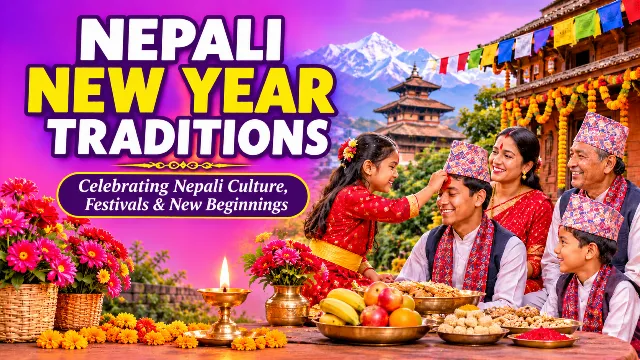
1. Welcoming the First Day of Baisakh
The first day of Baisakh marks the beginning of the New Year in the Bikram Sambat calendar. It is a meaningful occasion for people who follow this calendar in Nepal and in Nepali communities around the world.
Many people welcome the morning with a positive attitude, personal prayers, family time, and plans for the year ahead. Some visit religious places, while others enjoy a peaceful day at home or participate in public celebrations.
The beginning of Baisakh is also associated with seasonal change. Spring brings warmer weather, blooming flowers, and a renewed sense of activity in many parts of the country. For agricultural communities, the changing season is also a reminder of the work and opportunities ahead.
2. Visiting Temples and Religious Places
Visiting temples and other religious places is a familiar New Year activity for many Nepali families. People may offer prayers, light lamps, receive blessings, and express gratitude for the past year.
Depending on their faith and family traditions, people may visit Hindu temples, Buddhist monasteries, stupas, or other places of worship. These visits are often connected with wishes for good health, peace, prosperity, and happiness.
Offering Prayers
Families may begin the day with prayers and blessings for a peaceful and successful year.
Lighting Lamps
Some people light traditional lamps as a symbol of hope, positivity, and devotion.
Offering Flowers
Flowers and other traditional offerings may be presented during visits to places of worship.
3. Celebrating with Family and Relatives
Family gatherings are an important part of New Year celebrations for many Nepali households. Relatives may visit one another, share meals, exchange greetings, and spend time together.
People living away from their hometowns often call parents, grandparents, siblings, and relatives to exchange New Year wishes. Video calls and messages also help families stay connected when meeting in person is not possible.
For many families, the most meaningful part of the celebration is not a large public event but the opportunity to reconnect, forgive past disagreements, and begin another year with stronger relationships.
4. Exchanging New Year Greetings and Wishes
Exchanging greetings is one of the simplest and most widely recognized ways to celebrate Nepali New Year. Friends, relatives, neighbors, and colleagues share good wishes for the coming year.
Common greetings include “Happy Nepali New Year,” “Happy New Year,” and “Naya Barsa ko Shubhakamana.” People also send longer messages wishing others success, good health, prosperity, and new opportunities.
Today, digital greetings are popular as well. People share messages, photographs, greeting cards, and social media posts through messaging applications and online platforms.
5. Wearing New or Traditional Clothes
Some people choose to wear new clothes or traditional outfits when welcoming the New Year. For certain families, dressing neatly is part of making the day feel special and beginning the year with a fresh appearance.
Traditional clothing varies across Nepal’s many communities. Depending on the region and occasion, people may wear cultural dresses, jewelry, and accessories that reflect their heritage.
Traditional clothing is especially visible during public festivals, cultural performances, and community gatherings.
6. Enjoying Traditional Nepali Foods
Food brings people together during many festivals and special occasions in Nepal. Nepali New Year is an opportunity for families to prepare favorite meals, share traditional dishes, and enjoy time around the table.
There is no single national menu that every household follows for Nepali New Year. Food choices vary according to region, community, family customs, availability, and personal preferences.
Dal Bhat
A familiar everyday meal in Nepal that may also be served during family gatherings.
Momo
A popular dumpling enjoyed by many families and friends during casual celebrations.
Traditional Sweets
Sweets and desserts may be shared with relatives and guests during festive visits.
Festive Refreshments
Families may serve tea, drinks, and refreshments to visiting friends and relatives.
Regional Dishes
Local recipes and community food traditions add variety to New Year meals.
Seasonal Fruits
Fresh fruits may be included in family meals and offered to guests.
7. Celebrating Bisket Jatra in Bhaktapur
Bisket Jatra is one of the most famous New Year-related festivals in the Kathmandu Valley. It is especially associated with Bhaktapur and is known for its dramatic chariot processions, traditional music, community participation, and ceremonial pole.
During the festival, large wooden chariots carrying sacred images are pulled through historic streets. Crowds gather to watch the processions, while participants take part in rituals that have been preserved through generations.
One of the best-known events involves the chariot associated with Bhairav. Different groups pull the chariot through the town in a lively contest. The festival also includes the raising and later lowering of a tall ceremonial wooden pole, commonly called a lingo.
Bisket Jatra is a regional cultural celebration connected with the New Year period. Its rituals and stories are specific to the local communities and should not be treated as customs followed throughout all of Nepal.
8. Watching Sindoor Jatra in Thimi
Sindoor Jatra is another colorful New Year-period celebration associated with Madhyapur Thimi in Bhaktapur district. It is known for processions featuring decorated palanquins carrying local deities and clouds of bright red-orange vermilion powder.
Participants and spectators gather as traditional music accompanies the processions. The streets become vibrant with color, creating one of the most distinctive festival scenes in the Kathmandu Valley.
Sindoor Jatra reflects local religious devotion, community identity, and the cultural heritage of Thimi. The details and timing of its ceremonies follow local traditions.
9. Observing the Tongue-Piercing Tradition in Bode
Bode, a historic settlement in the Bhaktapur area, is known for a distinctive ritual associated with the New Year festival period. The ceremony involves a chosen participant whose tongue is pierced with a metal spike after ritual preparation.
The participant takes part in a traditional procession, and the ritual is connected with local beliefs, devotion, and community identity. It is a highly specialized practice rather than a general New Year custom across Nepal.
Visitors should observe respectfully, follow local instructions, and avoid obstructing participants or ceremonial processions.
10. Making New Year Resolutions and Personal Goals
Many people use the beginning of a new year as an opportunity to reflect on their lives and set personal goals. They may decide to improve their health, continue their education, develop new skills, save money, or spend more time with family.
Some people write down their plans, while others simply make personal commitments. These goals are not formal rituals, but they reflect the wider meaning of a new beginning.
11. Taking Part in Cultural Programs and Community Events
Cultural programs are organized in different parts of Nepal during the New Year period. Depending on the location, celebrations may include music, traditional dance, public gatherings, local fairs, performances, and community activities.
These events provide opportunities for younger generations to learn about local heritage and for communities to celebrate their shared identity.
12. Traveling and Exploring Nepal
The New Year holiday gives some families and friends an opportunity to travel. Popular destinations may include heritage towns, religious sites, hill stations, lakeside destinations, and natural attractions.
Some people prefer a short family outing, while others plan longer trips. Spring weather in many parts of Nepal can make sightseeing and outdoor activities attractive, although conditions vary by location and altitude.
13. Cleaning and Decorating Homes
Some households use the New Year as an occasion to clean, organize, and refresh their living spaces. A tidy home can create a welcoming environment for family members and visitors.
Families may decorate their homes with flowers, lights, traditional objects, or other decorations. These practices differ from household to household and are not mandatory New Year rituals.
14. Sharing Kindness and Helping Others
A new year can also inspire people to think about their relationships with neighbors and the wider community. Some choose to help people in need, support community activities, visit elderly relatives, or reconnect with people they have not spoken to for a long time.
Acts of kindness do not need to be expensive or complicated. A thoughtful message, a visit, or practical help can make the beginning of the year more meaningful.
15. Remembering Nepal’s Diverse New Year Celebrations
Nepal is home to many cultural, linguistic, and religious communities. Not every community observes its New Year on Baisakh 1. Different calendars and seasonal traditions are also important parts of Nepal’s cultural identity.
Understanding these differences gives a more complete picture of New Year celebrations in the country.
Nepal Sambat New Year
Nepal Sambat is a traditional calendar associated especially with the Newar community. Its New Year begins on a different date from Baisakh 1 and is celebrated during the Tihar period. Mha Puja, a ritual of self-worship and renewal, is closely associated with this New Year observance.
Maghi and the Tharu New Year
Maghi is an important festival for the Tharu community and is widely recognized as a New Year celebration in many Tharu traditions. It is observed around the first day of Magh. Family gatherings, traditional foods, cultural activities, and community celebrations are important parts of the occasion.
Lhosar Celebrations
Lhosar is celebrated by several Himalayan communities in Nepal. Different Lhosar traditions, including Sonam Lhosar, Gyalpo Lhosar, and Tamu Lhosar, follow their own calendars and cultural practices.
These celebrations may include family gatherings, traditional clothing, prayers, music, dance, and community events. Their dates are different from the Bikram Sambat New Year.
Other Regional New Year Traditions
Other communities also mark seasonal and cultural beginnings through their own calendars and festivals. For example, Jur Sital is an important New Year-related observance in the Maithili cultural tradition of the eastern and central Terai.
These different observances show that Nepal’s cultural calendar is diverse. The Bikram Sambat New Year is a major national calendar milestone, but it is not the only New Year tradition in the country.
Different New Year Traditions Celebrated in Nepal
| Celebration | Community or Association | Usual Period | Notable Traditions |
|---|---|---|---|
| Bikram Sambat New Year | Observed widely across Nepal | First day of Baisakh, usually mid-April | Family gatherings, greetings, visits, and regional festivals |
| Nepal Sambat New Year | Especially associated with Newar culture | During Tihar | Mha Puja and cultural observances |
| Maghi | Tharu community | Around the first day of Magh | Family gatherings, traditional food, and community celebrations |
| Tamu Lhosar | Gurung community | Late December | Traditional clothing, cultural programs, and gatherings |
| Sonam Lhosar | Tamang community | According to the lunar calendar | Community gatherings, music, dance, and rituals |
| Gyalpo Lhosar | Sherpa and related Himalayan communities | According to the lunar calendar | Prayers, cultural performances, and family celebrations |
| Jur Sital | Maithili cultural tradition | Around the Baisakh New Year period | Family visits, seasonal customs, and traditional food |
Dates and practices can vary according to the calendar followed by each community. This table provides a general overview rather than a complete festival calendar.
Why Are Nepali New Year Traditions Important?
New Year traditions are important because they connect people with their families, communities, history, and cultural identity. They provide an opportunity to reflect on the past while looking forward to new possibilities.
Preserving Cultural Heritage
Traditional festivals, rituals, music, and clothing help preserve cultural knowledge for future generations.
Strengthening Relationships
Family visits and greetings help maintain connections between relatives, friends, and neighbors.
Encouraging New Beginnings
The start of a new year inspires reflection, planning, and positive personal changes.
Supporting Communities
Local celebrations bring people together and encourage participation in community life.
Teaching Younger Generations
Children learn about family customs, traditional celebrations, and community history.
Celebrating Diversity
Different New Year observances highlight the cultural variety found throughout Nepal.
How to Celebrate Nepali New Year Meaningfully
You do not need to attend a large festival or organize an expensive event to celebrate Nepali New Year. Small activities can make the occasion memorable.
- Spend quality time with family members.
- Call relatives and friends to exchange greetings.
- Visit a religious or cultural place if you wish.
- Prepare a favorite meal and share it with others.
- Learn about a local New Year tradition.
- Support community events and cultural programs.
- Set realistic goals for the coming year.
- Help someone who may need support.
- Respect the customs and beliefs of other communities.
- Preserve family photographs and memories of celebrations.
Frequently Asked Questions About Nepali New Year Traditions
1. What is Nepali New Year?
Nepali New Year, also called Navavarsha or Naya Barsa, marks the beginning of the Bikram Sambat calendar year. It falls on the first day of Baisakh, generally in mid-April.
2. When is Nepali New Year celebrated?
Nepali New Year is celebrated on Baisakh 1 of the Bikram Sambat calendar. Its corresponding Gregorian date is usually in mid-April and may vary from year to year.
3. What is the most popular Nepali New Year tradition?
There is no single tradition followed by everyone. Family gatherings, exchanging greetings, religious visits, and local festivals are common ways people mark the occasion. Bisket Jatra is one of the best-known regional celebrations.
4. What is Bisket Jatra?
Bisket Jatra is a traditional festival associated with Bhaktapur and the New Year period. It is known for chariot processions, ceremonial pole rituals, traditional music, and community participation.
5. What is Sindoor Jatra?
Sindoor Jatra is a colorful Newar celebration associated with Madhyapur Thimi. Decorated palanquins carrying local deities move through the streets as participants celebrate with vermilion powder and traditional music.
6. Why do people visit temples during Nepali New Year?
Many people visit temples and religious places to pray, express gratitude, and seek blessings for health, happiness, peace, and prosperity in the coming year.
7. What foods are eaten during Nepali New Year?
There is no single fixed New Year menu. Families may prepare traditional meals, regional dishes, sweets, snacks, and favorite foods according to their customs and preferences.
8. Do people wear traditional clothes on Nepali New Year?
Some people wear traditional clothing or new outfits during the celebration. Clothing choices vary by family, community, and the type of event.
9. Is Nepali New Year a public holiday?
The Bikram Sambat New Year is recognized as a public holiday in Nepal. For specific annual holiday dates and government announcements, check the official calendar for that year.
10. What is the difference between Nepali New Year and Nepal Sambat New Year?
Bikram Sambat New Year begins on Baisakh 1, generally in April. Nepal Sambat New Year follows a different calendar and is celebrated during the Tihar period, especially in connection with Newar cultural traditions.
11. Do all communities in Nepal celebrate New Year on Baisakh 1?
No. Baisakh 1 is the beginning of the Bikram Sambat year, but different communities also observe New Year celebrations according to their own calendars and traditions. Examples include Maghi, Lhosar, and Nepal Sambat.
12. What is Maghi New Year?
Maghi is an important festival for the Tharu community and is celebrated around the first day of Magh. It marks a significant seasonal and cultural beginning in many Tharu traditions.
13. What is Lhosar?
Lhosar refers to New Year celebrations observed by several Himalayan communities. Tamu Lhosar, Sonam Lhosar, and Gyalpo Lhosar are examples of distinct celebrations with their own traditions and calendar dates.
14. How do Nepali people celebrate New Year abroad?
Nepali communities living abroad may celebrate through cultural programs, family gatherings, traditional food, music, dance, and online greetings. Events are often organized around the New Year date or on a nearby weekend.
15. What does Nepali New Year symbolize?
It symbolizes a fresh beginning, hope, renewal, reflection, and opportunities for the coming year. For many people, it is also a time to reconnect with family and cultural traditions.
16. How can I wish someone a Happy Nepali New Year?
You can say “Happy Nepali New Year,” “Happy New Year,” or “Naya Barsa ko Shubhakamana.” You can also send a personal message wishing the person health, happiness, success, and prosperity.
Conclusion: Celebrating the Spirit of Nepali New Year
Nepali New Year is more than the beginning of another calendar year. It is an occasion that brings together family relationships, cultural heritage, community celebrations, religious traditions, and hopes for the future.
From family gatherings and temple visits to the colorful Bisket Jatra of Bhaktapur and Sindoor Jatra of Thimi, Nepal’s New Year period reflects a rich variety of customs and regional celebrations.
The country’s different New Year observances also remind us that Nepal’s cultural identity is diverse. Whether people celebrate Baisakh 1, Nepal Sambat, Maghi, or Lhosar, these occasions provide opportunities to reconnect with traditions, share happiness, and welcome new beginnings.
May every New Year bring renewed hope, meaningful relationships, good health, and opportunities for everyone.